I come from
I grew up in Guadalajara, Mexico, where the gap between rules and reality was part of daily life — pollution without enforcement, public costs generated by private actors, and institutions that too often looked away. I didn’t have the vocabulary for it then, but I was watching externalities: costs pushed onto people who never agreed to carry them. That observation, more than any single job or degree, is the through-line of my work.
What I’ve done
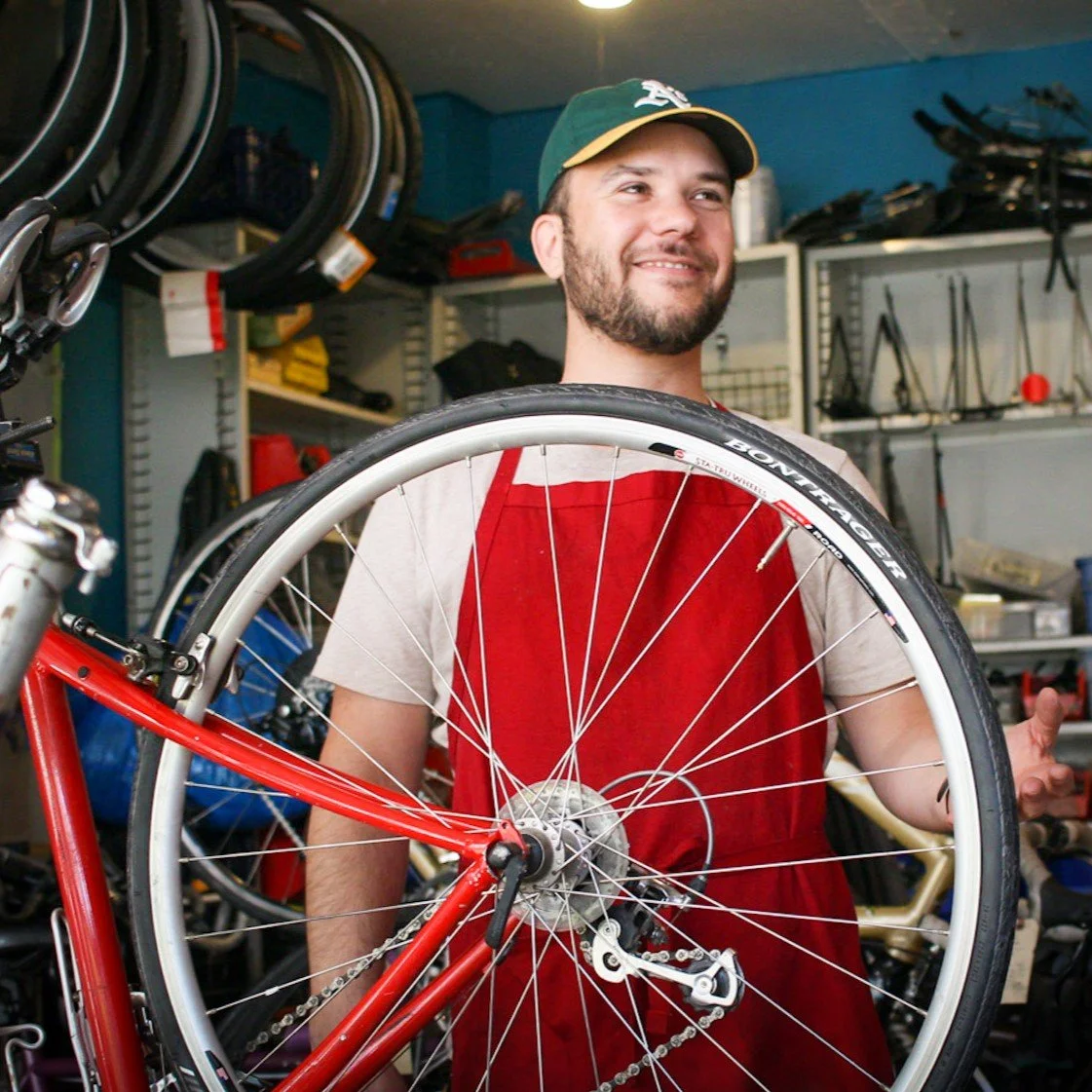
My career began in finance and operations. For nearly a decade I managed financial reporting, compliance, and accounting operations for a multi-entity investment office in the Bay Area, and served as volunteer treasurer and mechanic at Biketopia Community Workshop, a nonprofit bike shop in Berkeley. That work taught me how organizations actually run: budgets, controls, incentives, and the distance between what institutions claim and what their systems can deliver.
At UC Berkeley’s Goldman School of Public Policy, I completed a Master of Development Practice focused on energy transition, and spent my research year at Lawrence Berkeley National Laboratory studying how appliance efficiency standards change regional air quality and health outcomes. Alongside the degree, I co-founded the Mexico Development Lab, a binational program connecting policy students with government, industry, and civil-society institutions in Mexico and the US. Since then I’ve worked on greenhouse-gas accounting and climate-disclosure readiness with companies and manufacturer networks in both countries, and I currently work in finance and operations at a Los Angeles consulting firm while continuing my climate research and writing.
How I work
I came to see development work, at its core, as community-building — analysis matters when it reaches the people and institutions that can act on it. I work across languages and borders, across disciplines, and across the divide between research and implementation that too many organizations treat as permanent.
Away from work: bicycles — riding them, fixing them, and occasionally convincing cities to make room for them.